The aspiring skipper’s big dilemma: Paper or calluses on his hands?
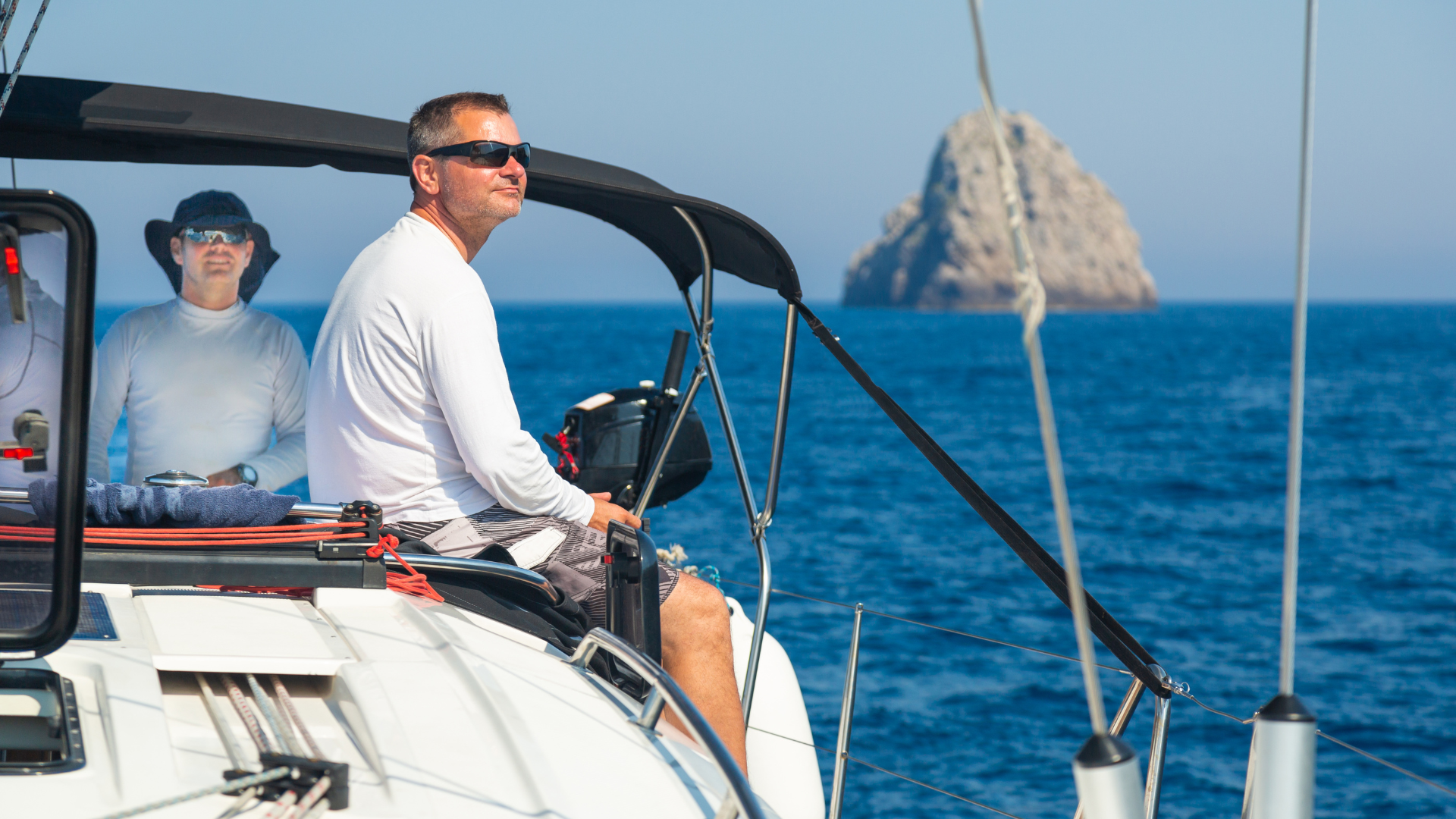
It’s the million-dollar question at every sailing school and on every internet forum: “What comes first: hitting the books with the PER textbook or getting my feet wet on deck?”. Most people, guided by the inertia of the system, believe the logical path is: enroll in a sailing school, pass a multiple-choice exam, complete the official weekend practical training, and—boom!—as if by magic, you’re a skipper.
I’m sorry to be the one to burst your bubble, but paper doesn’t float. There’s a world of difference between being legally qualified to operate a boat and actually feeling confident when you have to make decisions under pressure with 20-knot winds at the entrance to Baiona.
What the official system doesn’t tell you (but the sea does)
The certification system in Spain (PER, PNB, Yacht Skipper, etc.) is, basically, theoretical training. It gives you the necessary foundation: you learn the RIPA (to avoid collisions), navigation aids, radio communication, and some nautical charting. All of that is valuable, but it’s like trying to learn to drive by reading the car manual without ever having touched a steering wheel.
The problem arises when you confuse having a license with knowing how to sail. Truly knowing how to sail involves mastering three key elements that aren’t covered on the exam:
- Get a Feel for the Boat: Understand how the hull responds before the situation gets out of hand. Know what the helm is telling you when the boat starts to luff.
- Dealing with uncertainty: What to do when the engine sputters at the worst possible moment, the anchor doesn’t hold on the first try, or the weather decides to ignore the forecast you checked that morning.
- Real leadership: Managing a crew (who are usually your friends or family) who look at you with panic in their eyes, hoping you’ll know what to do when the boat heels over more than it should.
Why does it make sense to learn to sail BEFORE getting your license?
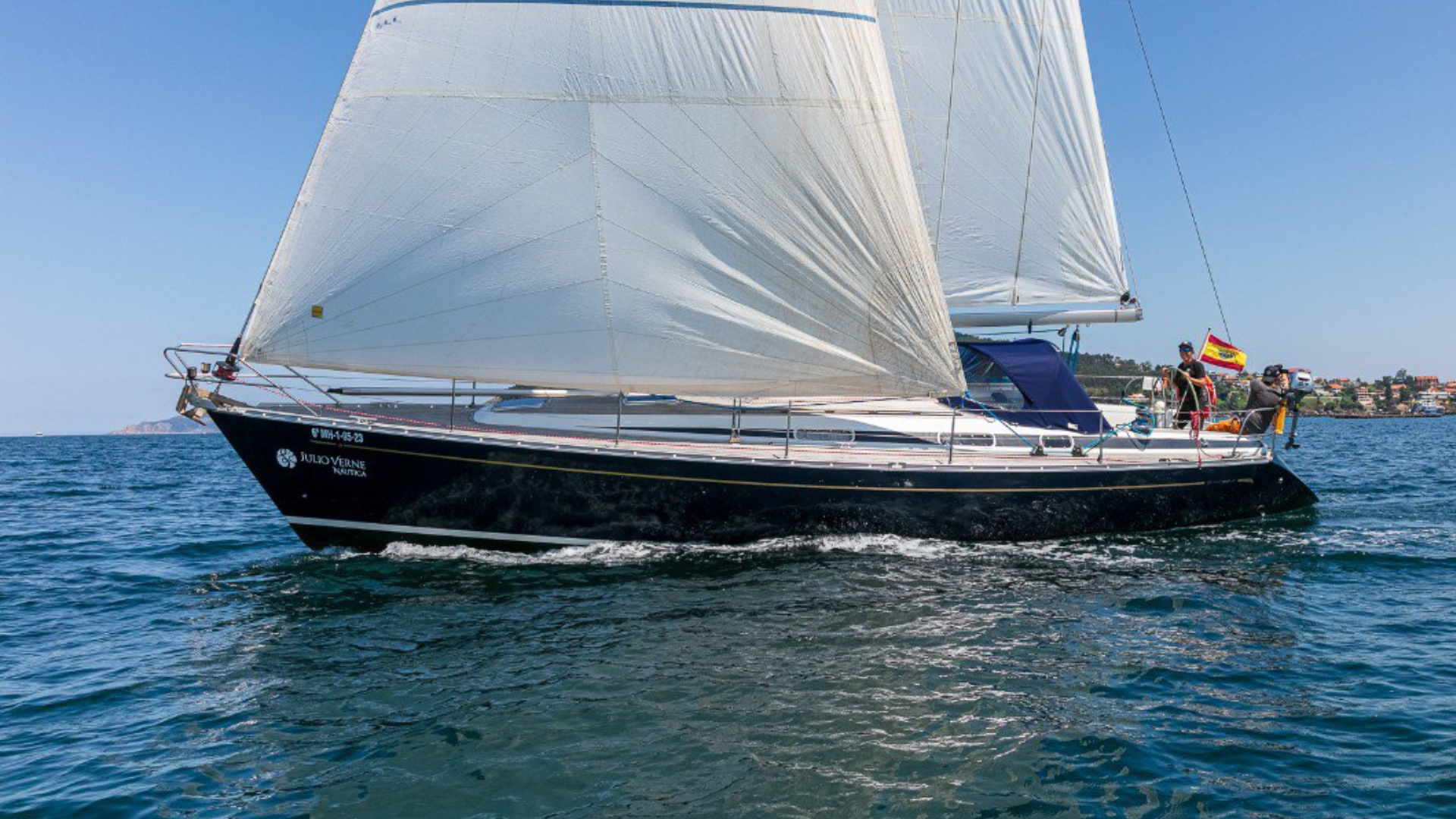
In Julio Verne Náutica we see many students who already have their certification but feel helpless on board. That’s why we recommend breaking the usual order: sail first, then study.
If you learn how to handle yourself on board, use the ropes, understand basic maneuvers, and “speak sailing” before you even open the PER textbook, I guarantee the theory will come naturally to you. You won’t be memorizing abstract concepts like “apparent wind” or “center of the sail”; you’ll be putting names to things you’ve already felt in your hands and on your face. You’ll go into the exam with sound judgment, not just short-term memory.
“Death Valley”: Between Official Practice and Reality
Many new skippers find themselves facing what we call the “Valley of Death.” They’ve earned their certification, rent a boat for the first time, and realize that the 16 hours of official training were just a group outing where they barely touched the wheel.
That lack of actual hours is what leads to accidents, failed exams, and—worst of all—people giving up sailing out of fear. Confidence isn’t something you buy with an exam fee; it’s built through repetition, a systematic approach, and, above all, sailing with people who know more than you do.
The Logical Evolution of Julio Verne Náutica
To keep you from becoming cannon fodder on the dock, we’ve designed a training program that actually makes sense:
- Step 1: Stop being a guest. Get started with our Crew Member Course. Learn how to be any skipper’s right-hand man without the pressure of being in charge.
- Step 2: Take the helm. Whether on a monohull or Catamaran, get your hands dirty. Learn why the boat does what it does and how to master it—not the other way around.
- Step 3: Overcome your fear. If the harbor keeps you up at night, take the Docking Course. Spend two days maneuvering in and out until the dock feels like child’s play.
- Step 4: Independence. Once you have your certification and the skills, dive into the Winter Training. It’s the ultimate stepping stone: 48 hours where you’re in charge—we’ll be watching closely, but the glory is all yours.
View the continuing education course calendar
Conclusion: Don’t Be a “Armchair Boss”
Don’t view sailing as just an administrative formality so you can show off a license in the summer. It’s a never-ending learning process. You can have every certification in the world and still be a public hazard at the Baiona dock, or you can have only the PNB and be an excellent skipper because you’ve spent hours getting to know the sea.
In Julio Verne Náutica we help ensure your safety on board is always three knots ahead of what your license says. Because at the end of the day, when the wind picks up and the harbor is in sight, your crew doesn’t trust your license… they trust you.
Are you ready to stop collecting licenses and start sailing for real? Stop by our base at the Monte Real Yacht Club and let’s talk about what you need. Or, if you’d prefer,send us a WhatsApp message! by clicking here.
Iván Pérez-Gándaras is CEO of Julio Verne Náutica and the main Director of the company's RYA Training Center. His vast experience is based on the highest nautical qualifications such as Yachtmaster without limits, STCW95 and RYA Yachtmaster Offshore with commercial endorsement. He has accumulated more than 20,000 ocean miles in deliveries and transatlantic crossings, in addition to 30,000 miles in scientific expeditions, including Antarctica and Newfoundland.
A trainer since 1993 and instructor of nautical qualifications since 2009, his background combines a solid technical background with exceptional practical experience. With a degree in Marine Biology from the University of Santiago de Compostela and World Champion in Dinghy Sailing (1989), his unique perspective ensures that Julio Verne Náutica's articles, training and charter services are delivered with the highest level of technical rigor and passion for the sea.




Comments are closed for this article!