A sailing school to learn how to sail for real (and not just to collect trading cards) Let’s be honest: learning to sail shouldn’t be a grueling ordeal of hitting
The aspiring skipper’s big dilemma: Paper or calluses on his hands? It’s the million-dollar question at every sailing school and on every internet forum: “What comes first: hitting the books
A sailing itinerary in the British Virgin Islands allows you to visit several islands of the archipelago during a week of calm navigation between protected anchorages and Caribbean waters.
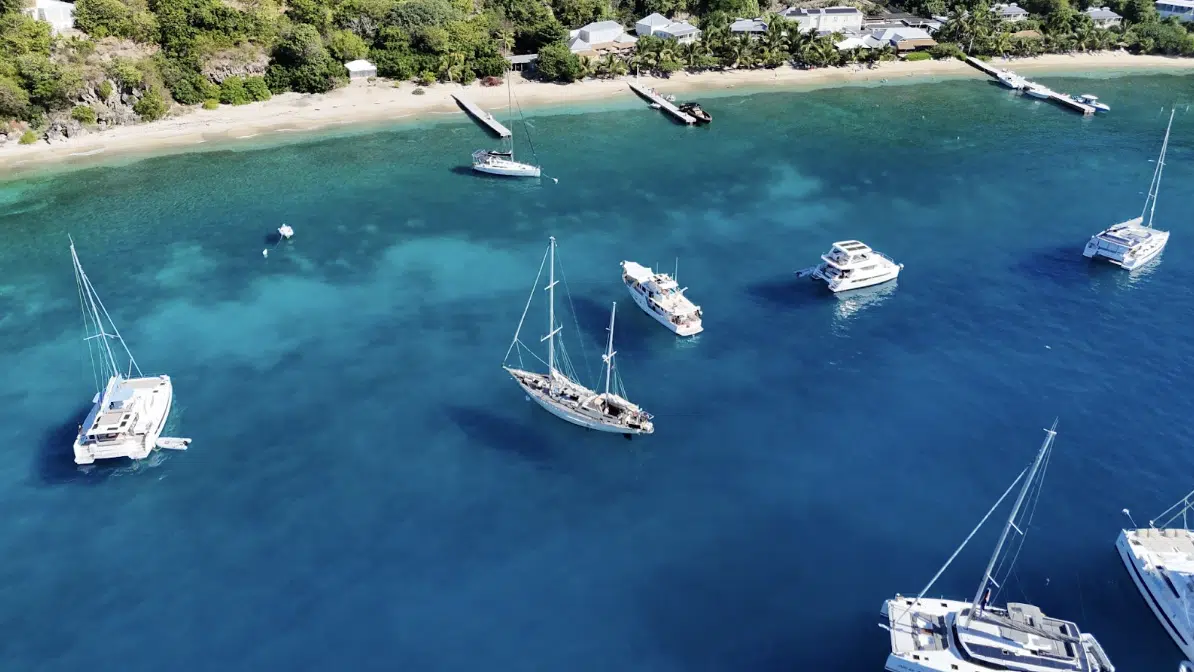
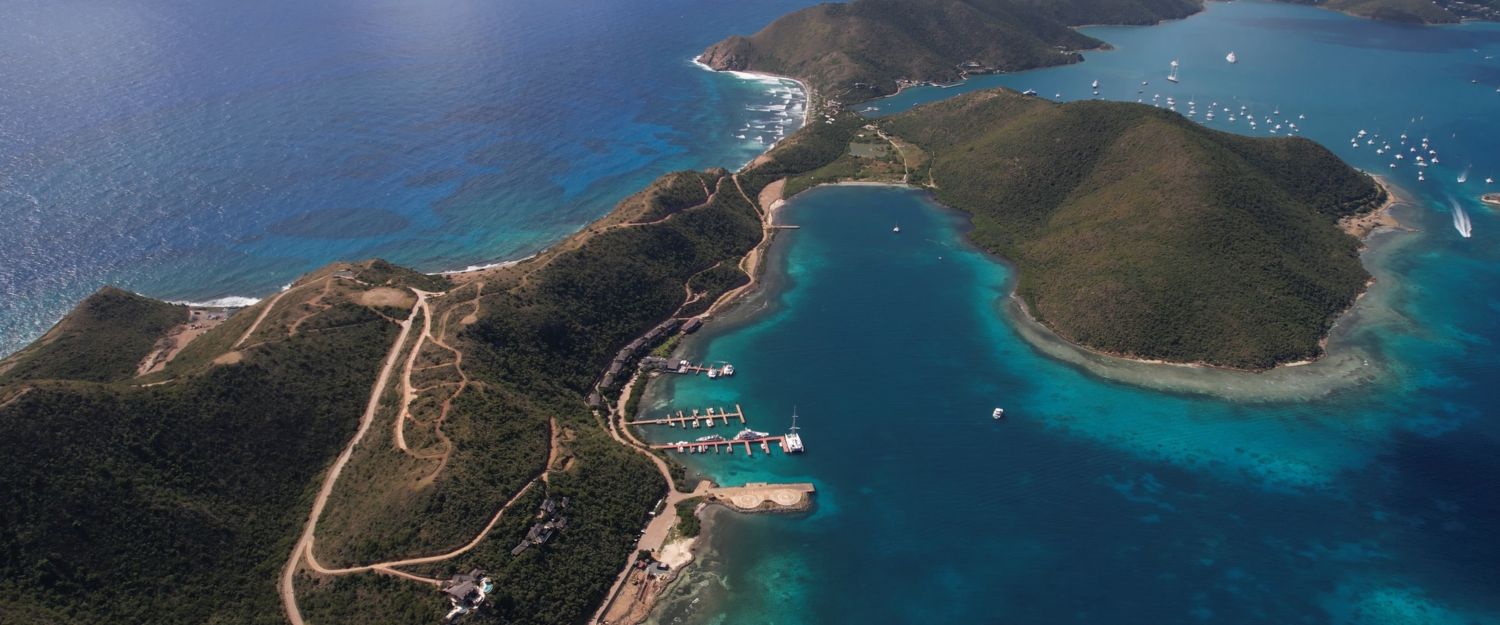
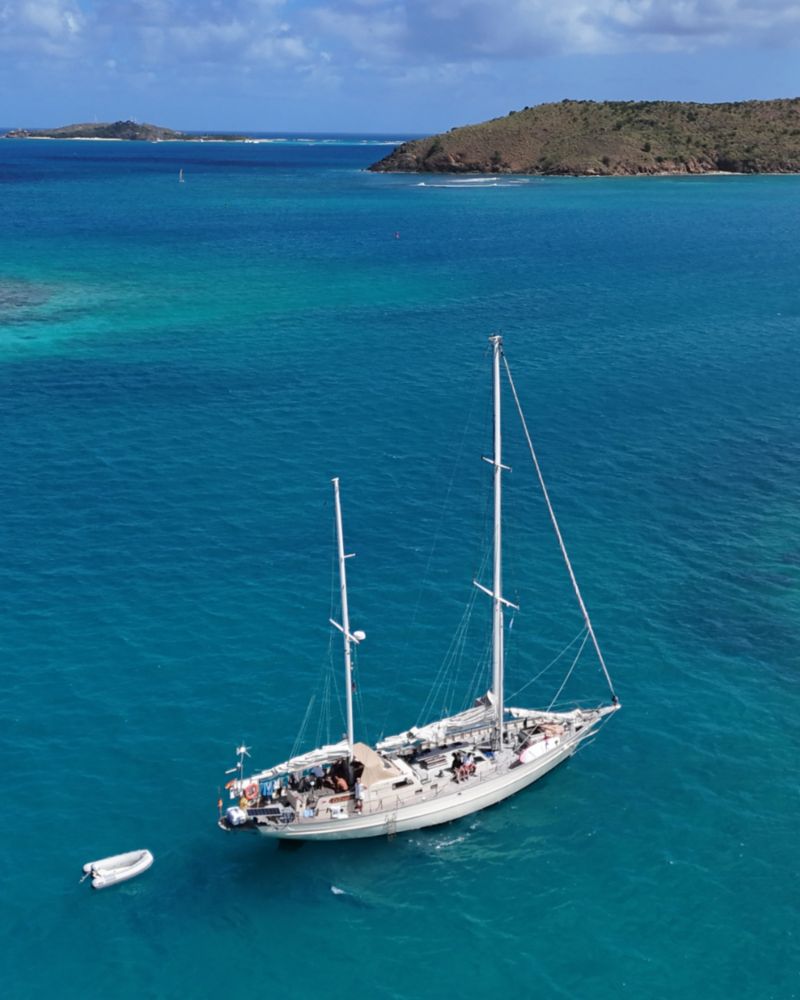
This Caribbean archipelago is known among sailors from all over the world for a very simple reason: everything here is designed for sailing. The distances between islands are short, the anchorages are well protected and the landscape changes constantly as the sailboat moves between cays, beaches and small bays.
That is why many people who want to get to know the Caribbean from the sea choose this place for their first experience sailing several days between islands. But what is a week of sailing in the BVI really like?
Why the British Virgin Islands are one of the best places in the world for sailing
The British Virgin Islands form a small archipelago located east of Puerto Rico. For centuries these waters were a refuge for traders, explorers and pirates who used the numerous islands as stopover points.
Today they are still one of the most popular places for sailing.
The main navigation channel of the archipelago, known as the Sir Francis Drake ChannelThe mainland, which connects many of the main islands, offers very stable conditions for most of the year. Thanks to this, it is possible to sail between islands without long open sea crossings.
This allows you to organize relaxed routes, combining daily navigation with time to enjoy each anchorage.
British Virgin Islands Sailing Route (7 days)
Although each voyage may vary according to wind or crew preferences, many week-long sailing routes follow similar itineraries that connect some of the archipelago’s most interesting islands.
The usual itinerary is as follows:
Day 1: Arrival at Tortola and first miles
The trip usually begins in Tortolathe main island of the archipelago and one of the most important nautical centers in the Caribbean.
After boarding the sailboat and organizing the equipment on board, the first day usually includes a short sail to begin to familiarize yourself with the boat and the environment.
It is the perfect time for the first swim in Caribbean waters and to start disconnecting from the rhythm of the mainland.
Day 2: Jost Van Dyke and Sandy Cay
Navigation continues westward until reaching Jost Van Dykea small island very popular with sailors.
Nearby is Sandy CaySandy Cay, a tiny islet surrounded by white sand and transparent waters where many boats stop for a swim or a walk around the island.
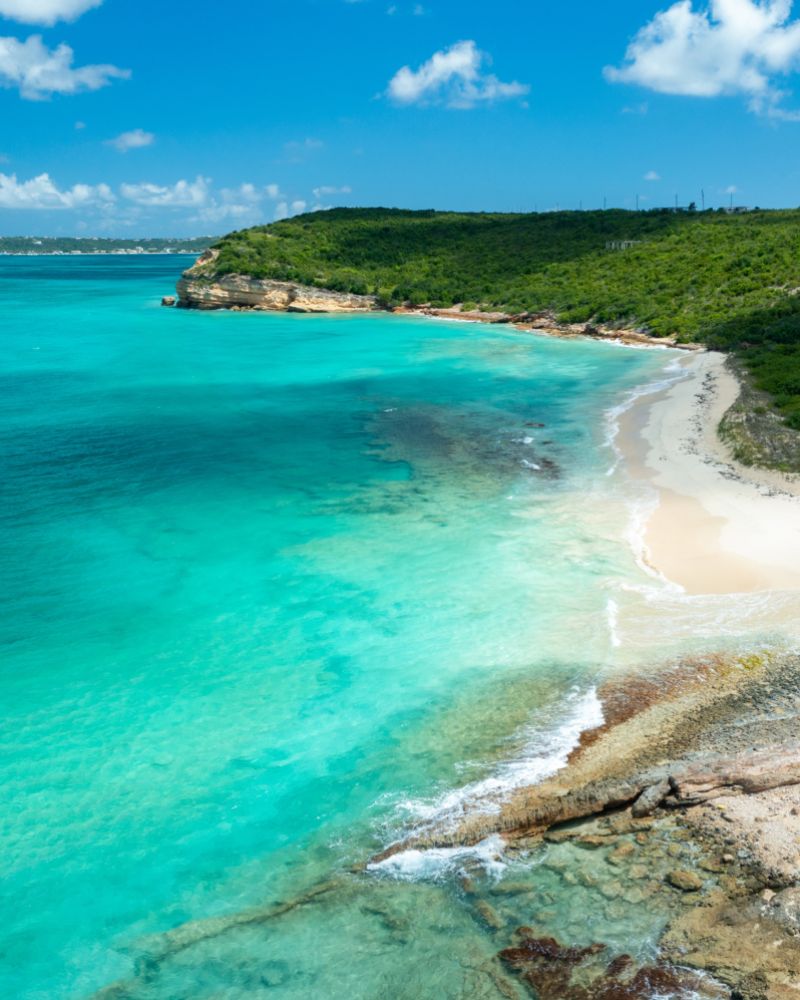
Here the Caribbean begins to show itself as we imagine it: clear water, calm beaches and protected anchorages.
Day 3: Norman Island
The next destination is usually Norman Islandan island historically associated with stories of pirates and hidden treasure.
Its sea caves and coral bottoms make it a perfect place for snorkeling and exploring the environment from the water.
The navigation here is usually short, allowing you to dedicate a good part of the day to enjoy the place.
Day 4: Cooper Island
The route continues to Cooper Islandone of the usual stops for those who travel the Virgin Islands by sailboat.
During this stretch the navigation runs between different islands and small cays, allowing you to enjoy the scenery while the sailboat moves quietly through the archipelago.
Anchoring in this area tends to be especially pleasant at sunset.
Day 5: Virgin Gorda and The Baths
One of the most impressive places on the tour is Virgin Gordaespecially the area known as The Baths.
Here huge granite blocks form natural passages, small pools between rocks and hidden coves that have become one of the most emblematic landscapes of the Caribbean.
Many sailors consider this stop one of the most memorable points of the entire route.
Day 6: The Sounds
Navigation continues to The Soundsin the northern part of Virgin Gorda.
This area is protected by reefs and offers calm waters, perfect for a more relaxing day before the end of the trip.
Here it is common to spend the afternoon swimming, exploring small beaches or simply enjoying the calm of the anchorage.
Day 7: Return to Tortola
The last day usually consists of a leisurely sail back to Tortola. Tortolathus closing the tour of the archipelago.
After several days living aboard, it is common for the crew to arrive with the feeling of having experienced the Caribbean from a completely different perspective.
What makes sailing around these islands special
The British Virgin Islands have something that many Caribbean destinations do not offer: the possibility of sailing every day without having to travel long distances.
This allows:
combine sailing with time to explore the islands
enjoy protected anchorages
discover beaches accessible only by sea
That is why this archipelago is considered one of the most complete destinations in the world to travel by sailboat.
Iván Pérez-Gándaras is CEO of Julio Verne Náutica and the main Director of the company's RYA Training Center. His vast experience is based on the highest nautical qualifications such as Yachtmaster without limits, STCW95 and RYA Yachtmaster Offshore with commercial endorsement. He has accumulated more than 20,000 ocean miles in deliveries and transatlantic crossings, in addition to 30,000 miles in scientific expeditions, including Antarctica and Newfoundland.
A trainer since 1993 and instructor of nautical qualifications since 2009, his background combines a solid technical background with exceptional practical experience. With a degree in Marine Biology from the University of Santiago de Compostela and World Champion in Dinghy Sailing (1989), his unique perspective ensures that Julio Verne Náutica's articles, training and charter services are delivered with the highest level of technical rigor and passion for the sea.
Grazas a esta axuda renováronse dous equipamentos electrónicos a bordo da “Peregrina” por novas opcións máis sostibles, sustituindo o equipamento de radar e de piloto automático. Equipamento de radar: A antena de radar FURUNO 1832 substitúiuse pola antena de radar RAYMARINE QUANTUM.
Co Q24D DOPPLER acadouse unha mellora enerxética. Esta mellora conséguiuse mediante a evolución da tecnoloxía de radar, obtendo un consumo moito menor; así como un software evolucionado e mellorado para unha navegación máis precisa, mellorando significativamente a seguridade a bordo.
Equipamento de piloto automático: O equipamento de piloto automático SIMRAD AC12 e a pantalla ZEUS TOUCH de 7″ foron substituídos por unha pantalla B&G NAC-3 + Triton2 e un controlador de piloto Triton2.
Descripción de la acción
Gracias a la ayuda de IGAPE, empresarios de los países Alemania y Francia, visitaron las instalaciones de Julio Verne Náutica y visitaron los distintos puntos turísticos clave de nuestras costas.
También pudimos publicitarnos en la revista Blauwasser de difusión en Alemania y Francia.
Por último, diseñamos y editamos los catálogos de la empresa que se distribuyeron a través de los visitantes que participaron en las misiones inversas y en las visitas a eventos internacionales en los que participa Julio Verne Náutica.
El proyecto Julio Verne Náutica se llevó a cabo gracias a una subvención de 25.814,80 euros concedida por la FEMP, la Conselleria do Mar y el GALP RIA DE VIGO-A GUARDA dentro del proyecto GALP-172, cuyos principales objetivos son promover el crecimiento económico a través de: la educación, el chárter, las rutas guiadas y el transporte en barco.
O proxecto Julio Verne Náutica se levou a cabo tras a subvención de 160.595,20€ aportados dende o FEMP, Conselleria do Mar e GALP RIA DE VIGO-A GUARDA a través do proxecto GALP7-092 cuxos principais obxectivos son o fomento do crecemento económico a través de: Formación, chárter, rutas guiadas e transporte de embarcacións.
Julio Verne Náutica conta co apoio do Inega (Instituto Enerxético de Galicia) para a mellora enerxética dirixida ao sector servizos a través do Programa “Bono enerxía peme 2023”, recibindo 4.788,00 € para este proxecto. Operación cofinanciada pola Xunta de Galicia. Conseguir unha economía mais limpa e sostible.
Julio Verne Náutica desarrolló el proyecto “Velas por el Alzheimer”, una iniciativa para acercar el mar, la navegación y la cultura marinera a personas con Alzheimer, familiares y cuidadores/as.
El programa incluyó talleres adaptados, visitas, salidas al entorno marítimo y una regata final inclusiva en la Ría de Vigo, con el objetivo de favorecer la participación social, el bienestar y la colaboración entre entidades sociales y náuticas.
El proyecto contó con el apoyo de la Xunta de Galicia, a través del IGAPE, en el marco de las ayudas para avanzar en criterios ambientales, sociales y de gobernanza —ASG— en empresas gallegas.





Comments are closed for this article!