
Skip to content

Total success of the Sails for Alzheimer’s Workshops

Search

Recent articles

Learning to Sail in Baiona: Why 16 Hours of Official Training Won’t Teach You to Be a Skipper (and What to Do About It)

A sailing school to learn how to sail for real (and not just to collect trading cards) Let’s be honest: learning to sail shouldn’t be a grueling ordeal of hitting
Should I learn to sail first, or get my certification first?

The aspiring skipper’s big dilemma: Paper or calluses on his hands? It’s the million-dollar question at every sailing school and on every internet forum: “What comes first: hitting the books

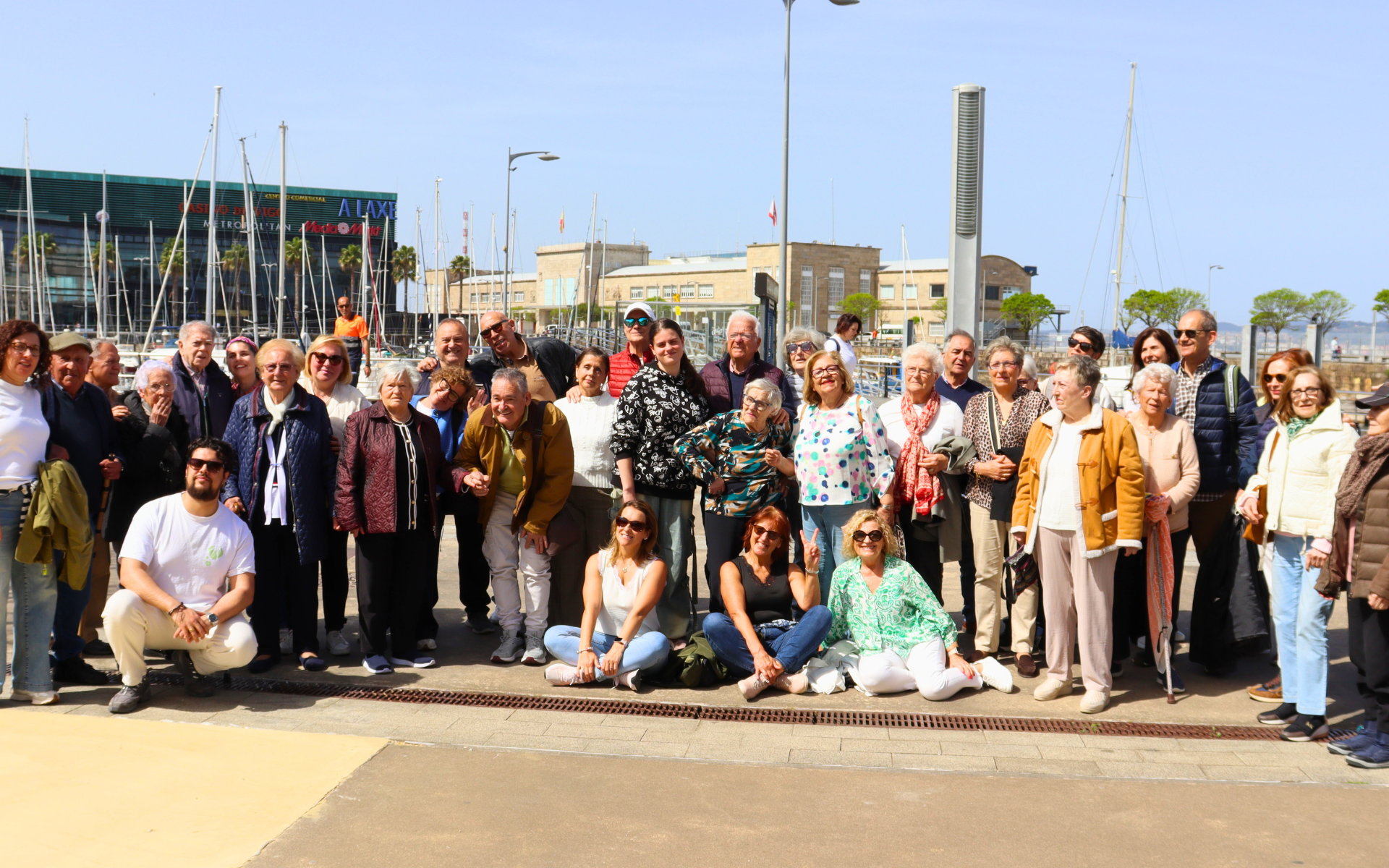
At Julio Verne Náutica we have always known that the sea has a special magnetism, but what we have lived these last weeks has marked us forever. Today we want to share with you, for the first time on our website, the success of the phases of the workshops and visits of our social innovation project: Sails for Alzheimer’s disease.

For us, this is not just another project. It is our way of turning our passion for sailing into a real welfare tool for people with Alzheimer’s disease and their caregivers in the Vigo estuary.

What are we building at Jules Verne?

We have been inspired by the “Veles per l’Alzheimer” methodology to create a program adapted to our coast. At Julio Verne Náutica we not only offer a boat ride; we design therapeutic sailing experiences where the sea acts as a stimulus for memory and a refuge for emotional well-being.

Our goal is clear: to demonstrate that our boats are inclusive spaces where no one is left on land.

What we have achieved in our workshops

We have completed the training and workshops phase with results that fill us with pride. During these days, we have led activities designed to connect with the participants:

  • Stimulation and Reminiscence: We have worked with puzzles and photographs of our local seafaring culture, awakening stories and memories that seemed dormant.

  • Seafaring Skills: In our knot workshops we have seen how the practice of cabuyería became a perfect exercise in psychomotor skills and self-improvement.

  • Our Commitment: All of our team and volunteers have been specifically trained with AFAGA Alzheimer. We are not only professionals of the sea; we have prepared ourselves thoroughly to take care of every detail and offer an environment of safety and maximum empathy.

Next goal: Inclusive final regatta

After having successfully closed the workshops, in Julio Verne Náutica we are already preparing the big milestone of the project. Very soon we will celebrate the Final Inclusive Regatta in the Vigo Estuary.

It will be a day in which we will sail together (users, families, volunteers and our team) to give visibility to this cause. We want the sea to be filled with solidarity sails and, therefore, we invite other clubs and boats to join our fleet.

Stay tuned! We will announce the official date soon. Thank you for joining us on this voyage. In Julio Verne Náutica we remain convinced that, although memory may fail, the sea always helps us to feel at home.

CEO Julio Verne Náutica |  + posts

Iván Pérez-Gándaras is CEO of Julio Verne Náutica and the main Director of the company's RYA Training Center. His vast experience is based on the highest nautical qualifications such as Yachtmaster without limits, STCW95 and RYA Yachtmaster Offshore with commercial endorsement. He has accumulated more than 20,000 ocean miles in deliveries and transatlantic crossings, in addition to 30,000 miles in scientific expeditions, including Antarctica and Newfoundland.

A trainer since 1993 and instructor of nautical qualifications since 2009, his background combines a solid technical background with exceptional practical experience. With a degree in Marine Biology from the University of Santiago de Compostela and World Champion in Dinghy Sailing (1989), his unique perspective ensures that Julio Verne Náutica's articles, training and charter services are delivered with the highest level of technical rigor and passion for the sea.

Search

Recent entry

Comments are closed for this article!

Descrición da acción

Grazas a esta axuda renováronse dous equipamentos electrónicos a bordo da “Peregrina” por novas opcións máis sostibles, sustituindo o equipamento de radar e de piloto automático.
Equipamento de radar: A antena de radar FURUNO 1832 substitúiuse pola antena de radar RAYMARINE QUANTUM.

Co Q24D DOPPLER acadouse unha mellora enerxética. Esta mellora conséguiuse mediante a evolución da tecnoloxía de radar, obtendo un consumo moito menor; así como un software evolucionado e mellorado para unha navegación máis precisa, mellorando significativamente a seguridade a bordo.

Equipamento de piloto automático: O equipamento de piloto automático SIMRAD AC12 e a pantalla ZEUS TOUCH de 7″ foron substituídos por unha pantalla B&G NAC-3 + Triton2 e un controlador de piloto Triton2.

Descripción de la acción

Gracias a la ayuda de IGAPE, empresarios de los países Alemania y Francia, visitaron las instalaciones de Julio Verne Náutica y visitaron los distintos puntos turísticos clave de nuestras costas. 

También pudimos publicitarnos en la revista Blauwasser de difusión en  Alemania y Francia. 

Por último, diseñamos y editamos los catálogos de la empresa que se distribuyeron a través de los visitantes que participaron en las misiones inversas y en las visitas a eventos internacionales en los que participa Julio Verne Náutica.

El proyecto Julio Verne Náutica se llevó a cabo gracias a una subvención de 25.814,80 euros concedida por la FEMP, la Conselleria do Mar y el GALP RIA DE VIGO-A GUARDA dentro del proyecto GALP-172, cuyos principales objetivos son promover el crecimiento económico a través de: la educación, el chárter, las rutas guiadas y el transporte en barco.

O proxecto Julio Verne Náutica se levou a cabo tras a subvención de 160.595,20€ aportados dende o FEMP, Conselleria do Mar e GALP RIA DE VIGO-A GUARDA a través do proxecto GALP7-092 cuxos principais obxectivos son o fomento do crecemento económico a través de: Formación, chárter, rutas guiadas e transporte de embarcacións.

Julio Verne Náutica conta co apoio do Inega (Instituto Enerxético de Galicia) para a mellora enerxética dirixida ao sector servizos a través do Programa “Bono enerxía peme 2023”, recibindo 4.788,00 € para este proxecto. Operación cofinanciada pola Xunta de Galicia. Conseguir unha economía mais limpa e sostible.

Julio Verne Náutica desarrolló el proyecto “Velas por el Alzheimer”, una iniciativa para acercar el mar, la navegación y la cultura marinera a personas con Alzheimer, familiares y cuidadores/as.

El programa incluyó talleres adaptados, visitas, salidas al entorno marítimo y una regata final inclusiva en la Ría de Vigo, con el objetivo de favorecer la participación social, el bienestar y la colaboración entre entidades sociales y náuticas.

El proyecto contó con el apoyo de la Xunta de Galicia, a través del IGAPE, en el marco de las ayudas para avanzar en criterios ambientales, sociales y de gobernanza —ASG— en empresas gallegas.

Ayuda concedida: 20.960,00 €
Expediente: IG300F-2025-000-000105

MENU